
The Octagon Frame Configurator (Unity)
The Challenge While working as a 3D Artist:
I recognized a massive bottleneck: our team was wasting hours manually assembling frame designs in Cinema 4D for manufacturing documentation. The company had a legacy in-house Unity configurator, but it was viewed by IT as an unrecoverable project. It was plagued by UX issues, unoptimized CAD assets, and a failing authentication system.
The Solution:
After volunteering to optimize the low-poly models, I gained access to the source code and implemented immediate graphical and performance tweaks. This proved the tool's potential, and I was tasked with leading its full redevelopment. I established a direct feedback loop with our global distributors to understand their exact needs. The strategy was two-fold: stabilize the software for immediate daily use, and then systematically refactor 90% of the codebase from the ground up to build a scalable architecture.
Key Architecture & Features:
Custom Rendering Pipeline: Re-engineered the selection system to live on a rendering buffer as an overlay, permanently fixing the legacy material-override bugs.
Enterprise Integration: Rebuilt the authentication system for fail-safe access and integrated real-time global pricing. The system now dynamically calculates localized currencies and custom distributor discount levels, providing quotes so accurate they are cross-referenced by the official billing department.
Workflow Automation: Implemented robust cloud-based frame sharing, local save states, and a dynamic, fail-safe frame catalogue with deep customization options.
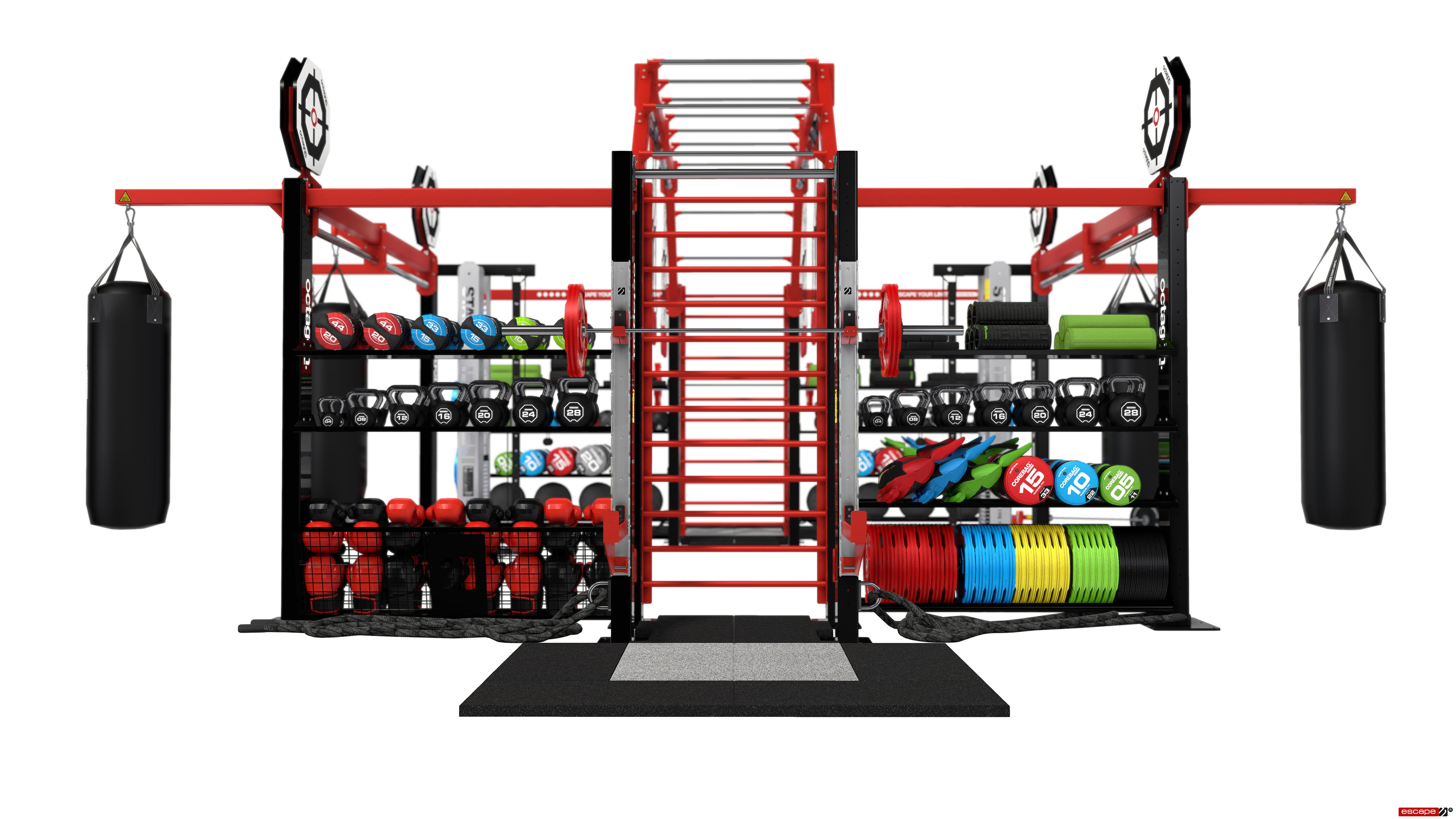
Fully Dynamic and Modular Frame Assembling
Developed a dynamic frame assembly system combining asset management with flexible component logic. Frame structures are built in real-time based on user selections, with parts automatically aligned, snapped, and validated for compatibility. Managed full asset preparation and created the underlying ruleset to ensure correct assembly of complex multi-part configurations
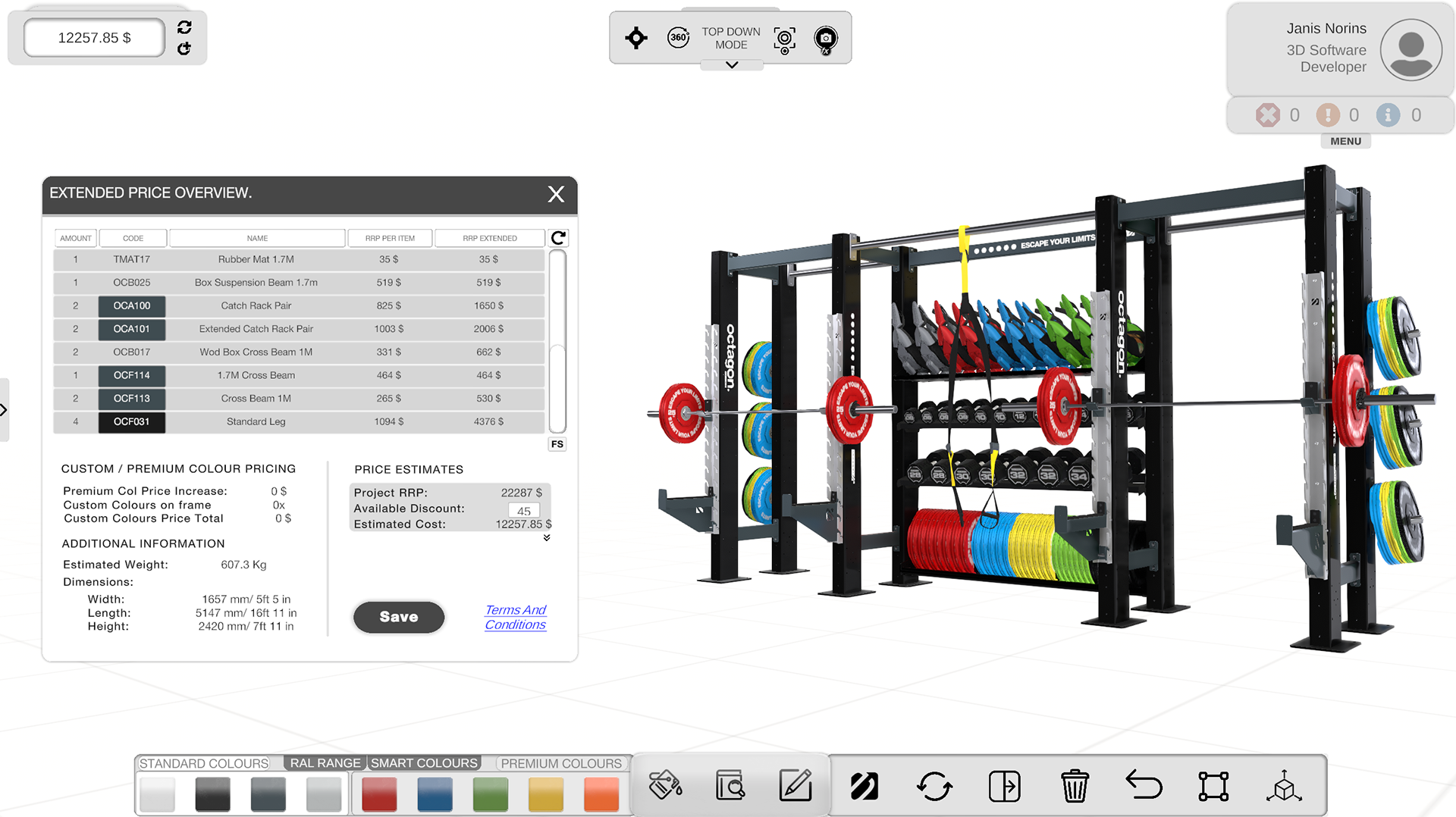
In-Scene Price Breakdown
Built a dynamic pricing system fully integrated into the product configuration interface. Supports international pricing structures with multiple currency pairs, distributor-specific discounts, pricing brackets, and capped discount levels per item. Driven by CSV imports/exports and extensive Excel-based data preparation for dataset creation and ongoing updates. Handles large, complex spreadsheets for smooth integration of constantly evolving pricing data. Enables real-time, transparent cost breakdowns directly inside the design scene.
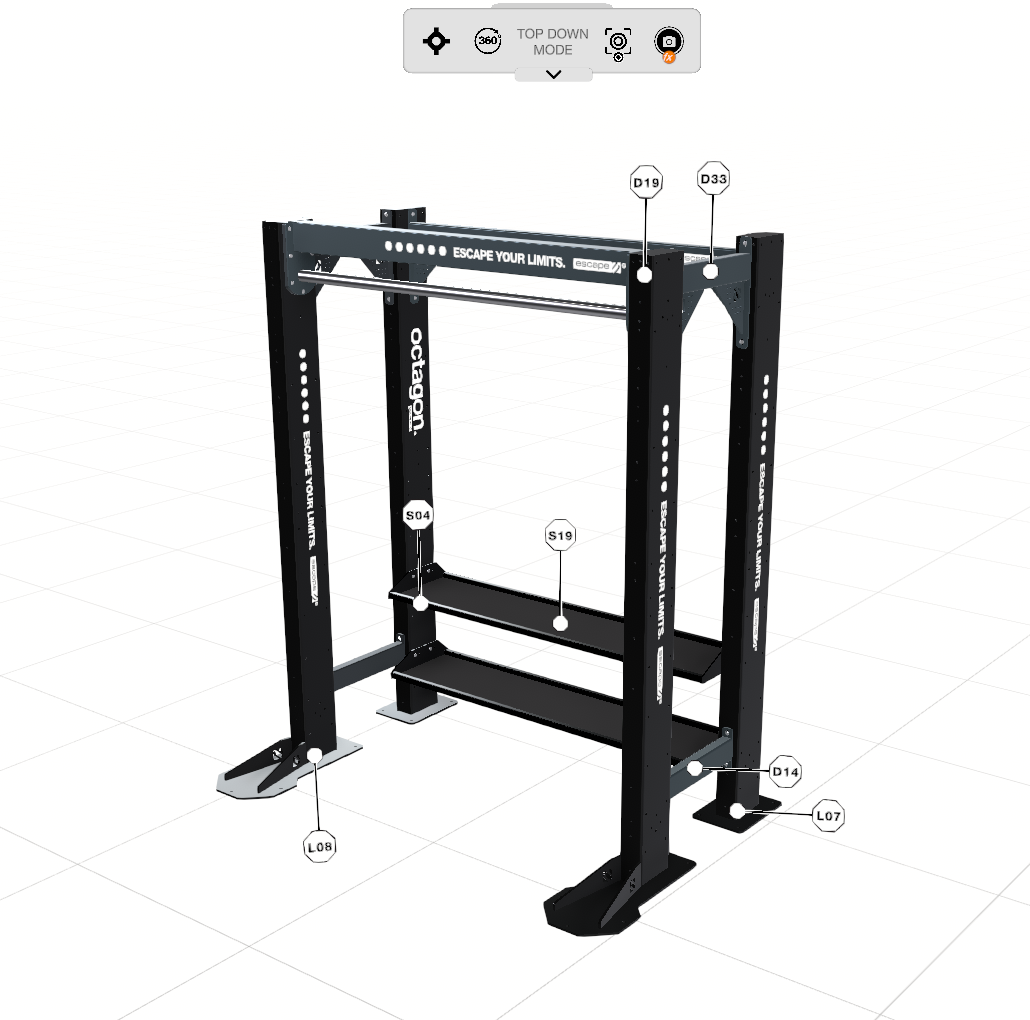
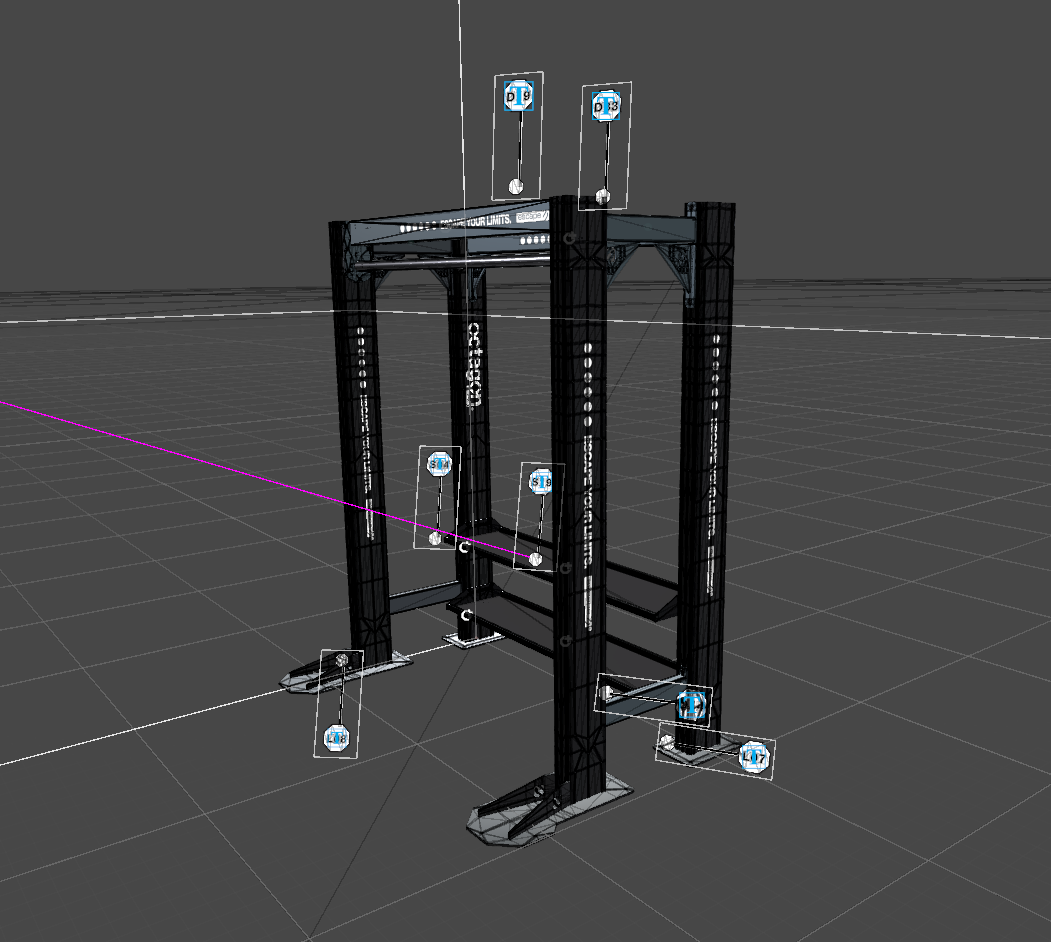
In-Scene Part Breakdown
Implemented an interactive part labelling system using scene-space UI elements dynamically positioned between camera and target. Labels automatically offset, rotate, and align for clear, flat 2D-style visibility regardless of viewing angle. Allows users to easily identify individual parts directly within the 3D scene, combining clean presentation with fully interactive elements for quick reference.
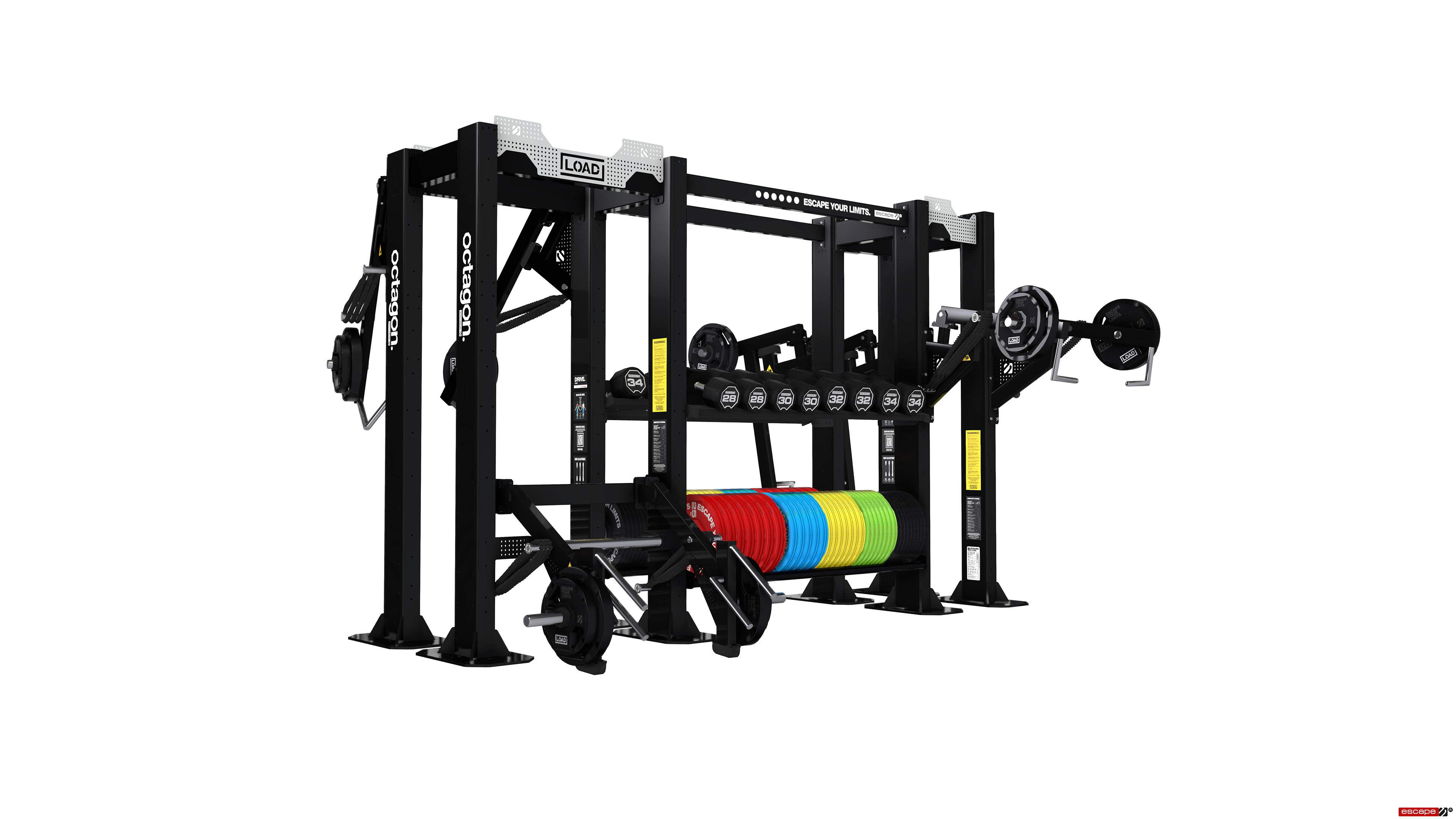
CAD Asset Optimization
Processed and rebuilt CAD assets for real-time platforms with optimized poly counts, clean topology, and efficient UV layouts. Recreated high-detail parts into low-poly, performant models suitable for interactive applications, ensuring visual fidelity while maintaining runtime performance. Full pipeline handled using C4D for geometry prep, UV unwrapping, texturing, and conversion into Unity-ready assets.
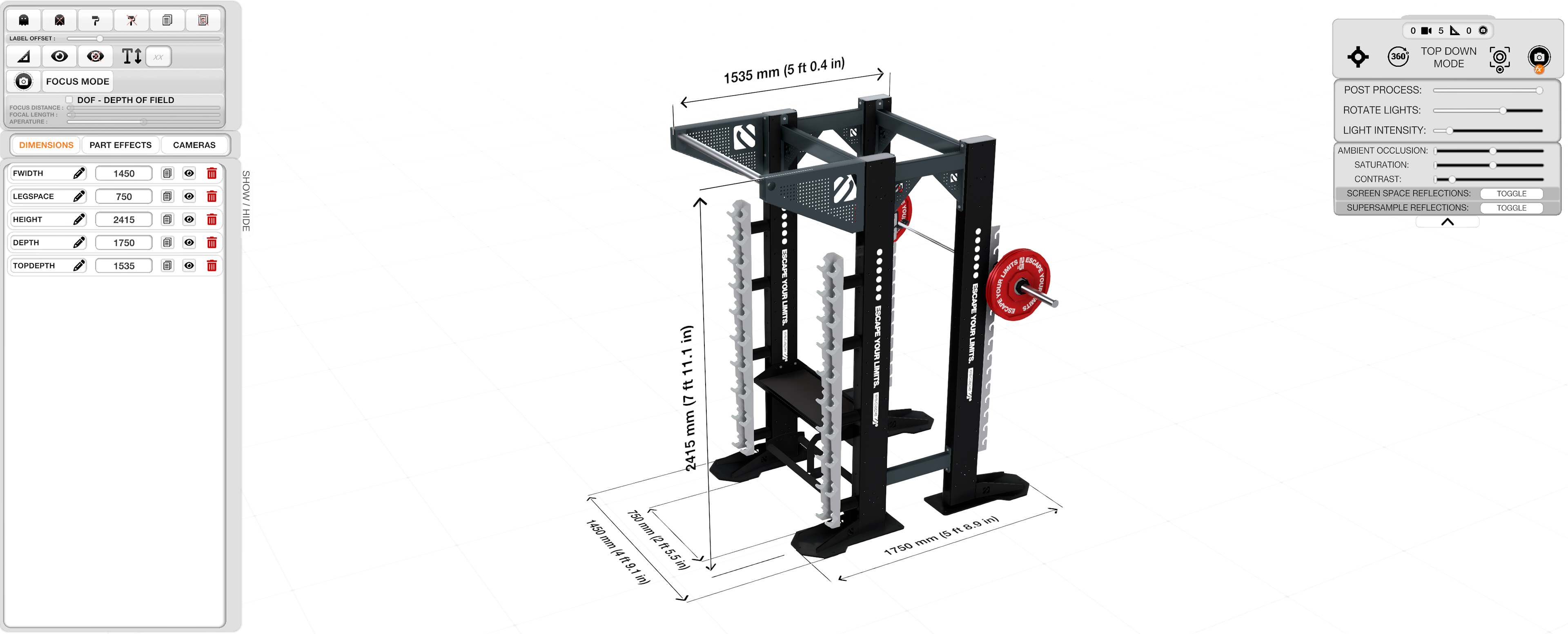
Measuring Tools
Engineered an interactive 3D measurement system with mesh-surface and axis snapping, featuring real-time metric/imperial conversions rendered directly in the scene UI. This streamlined user workflows by allowing accurate spatial planning and quoting without leaving the 3D environment.
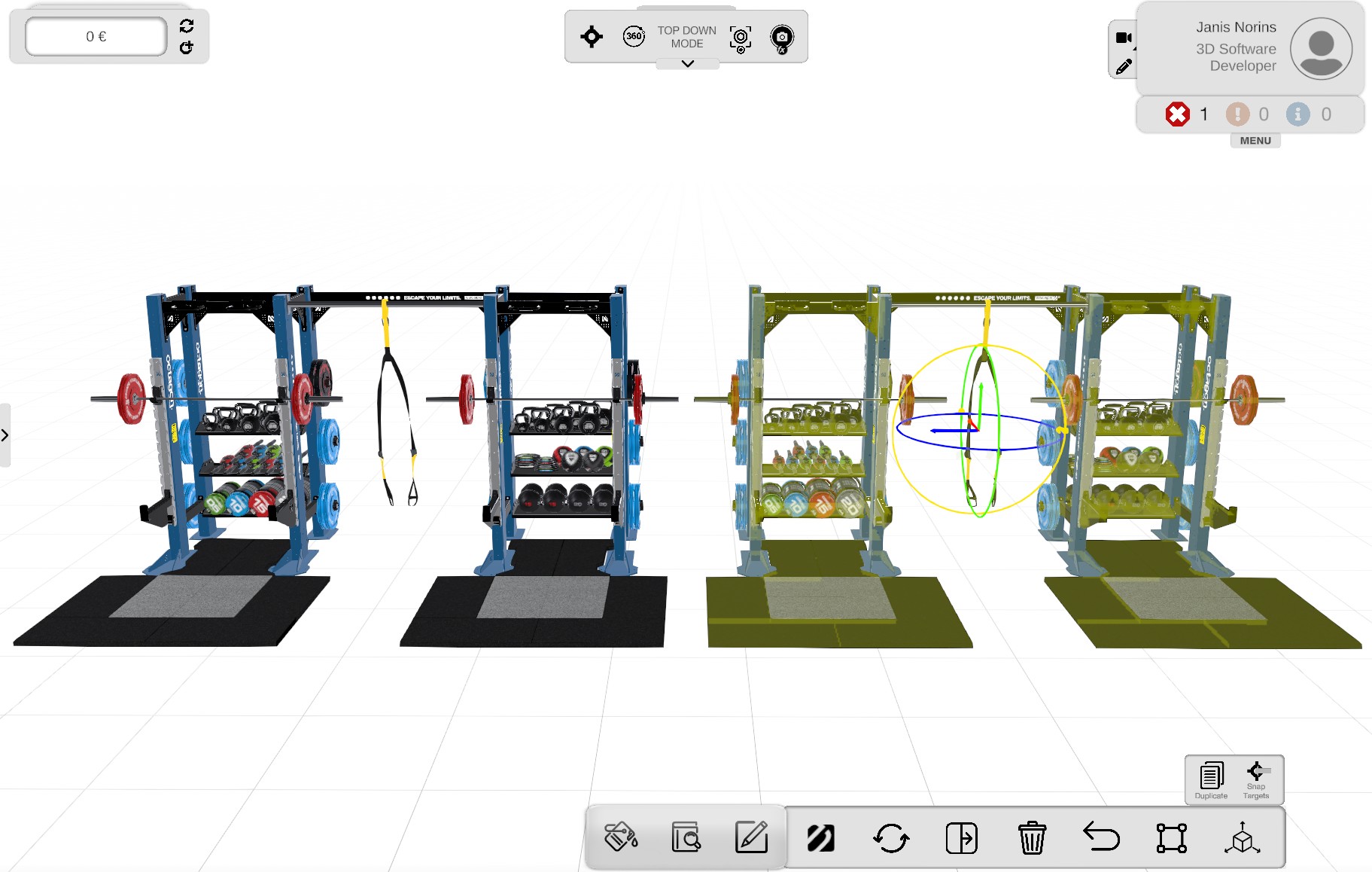
Edit Tools with In-Scene Gizmo
Added in-scene gizmo controls to handle part manipulation . Users can rotate, flip, move, duplicate and bulk-select elements without leaving the main view. The system includes full undo/redo support for non-destructive editing, allowing flexible adjustments during the design process while keeping the configuration consistent.
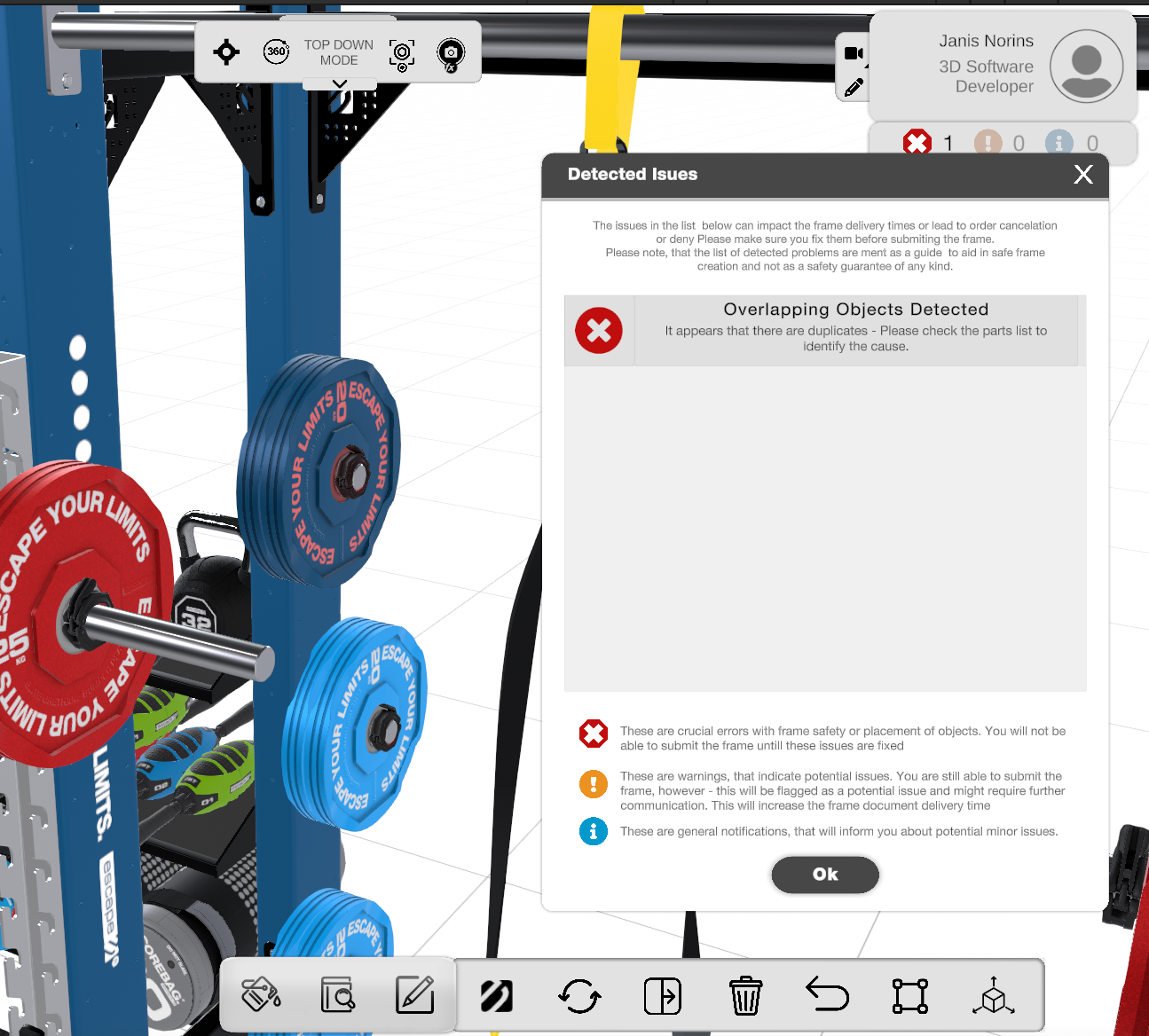
Background Scene Checks
Implemented background safety and consistency checks that run asynchronously during scene interaction. Continuously monitors for common build mistakes such as overlapping parts or invalid placements without affecting system performance. Allows users to receive immediate feedback on potential issues while keeping the design process smooth and responsive.
Customizable Frame Catalogue
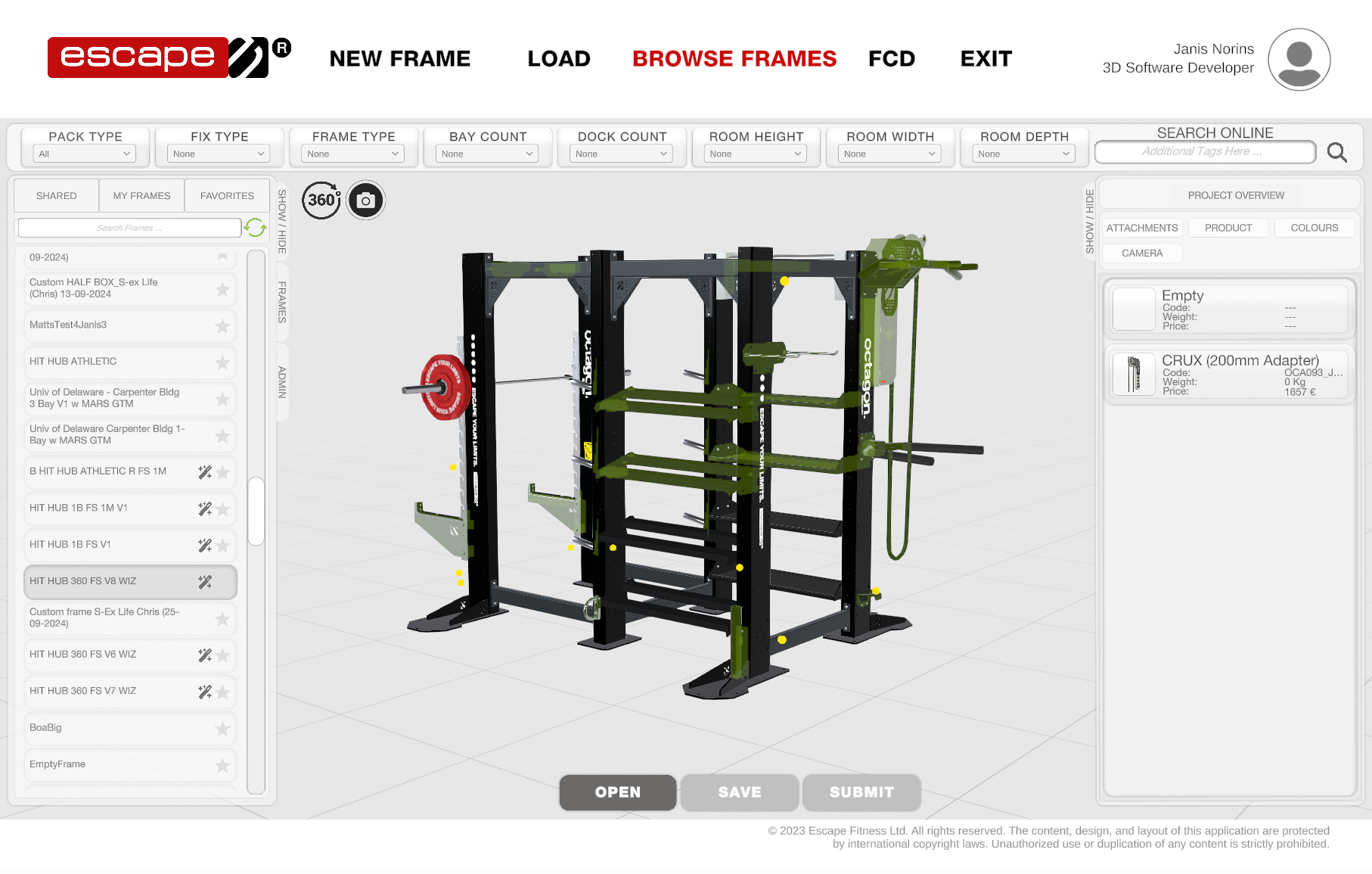
Created a permission-based frame catalogue system for safe configuration building. Users with limited access can only select from pre-approved part combinations and colour options, ensuring valid and production-safe designs. Includes in-scene admin controls allowing catalogue management and frame creation directly inside the application without requiring developer involvement.
Online and Offline Frame Browsing & Management
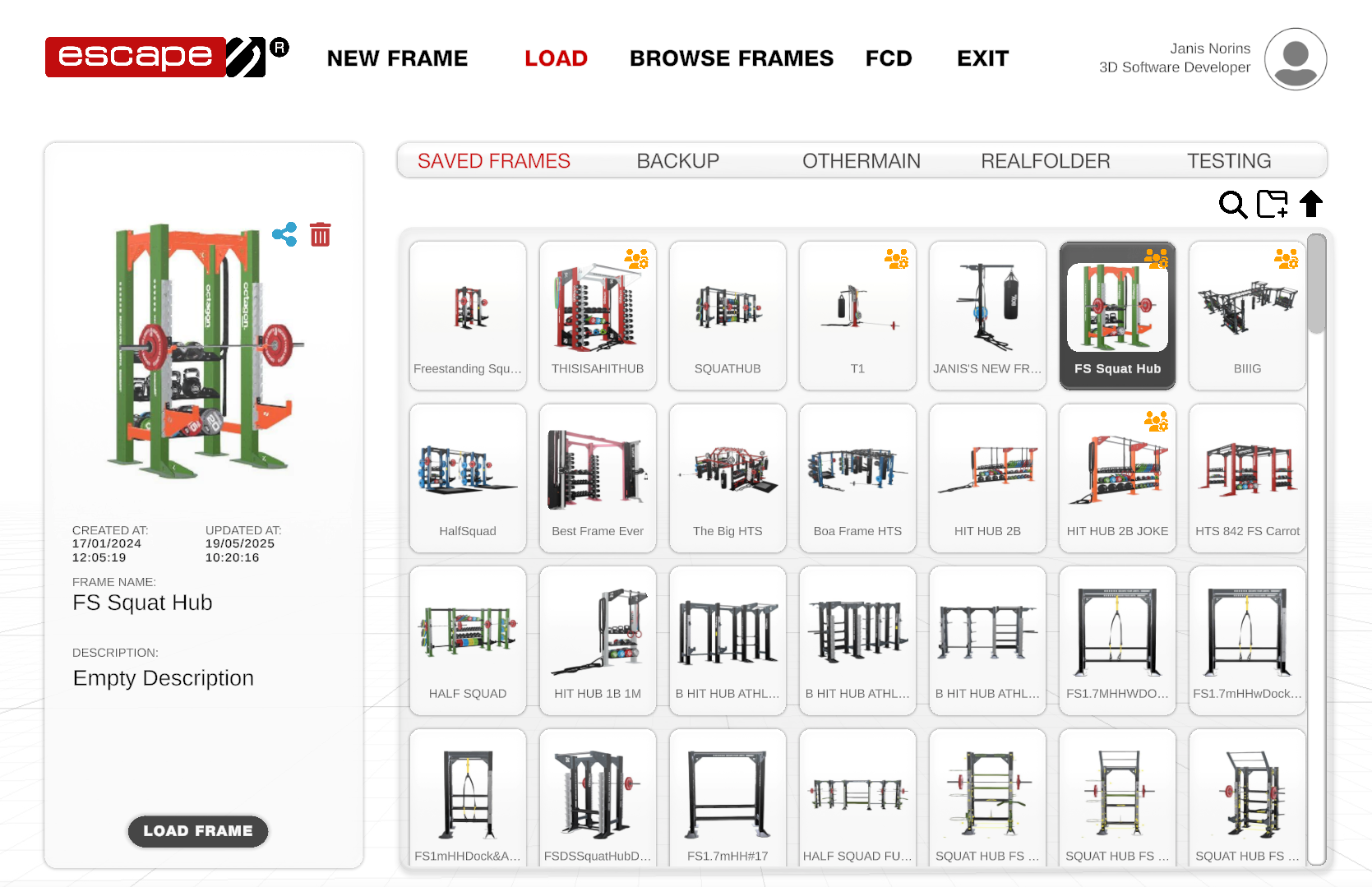
Built a frame management system supporting both online synchronization and local offline access. Includes folder structures, categories, and user-specific frame libraries. Web requests handle online syncing with AWS cloud storage for screenshots, while downloaded images are optimized into lower-resolution thumbnails for efficient UI browsing. Backend management involved extensive dataset upkeep using MongoDB Compass for database maintenance and version control of frame configurations.
Pipeline & Telemetry
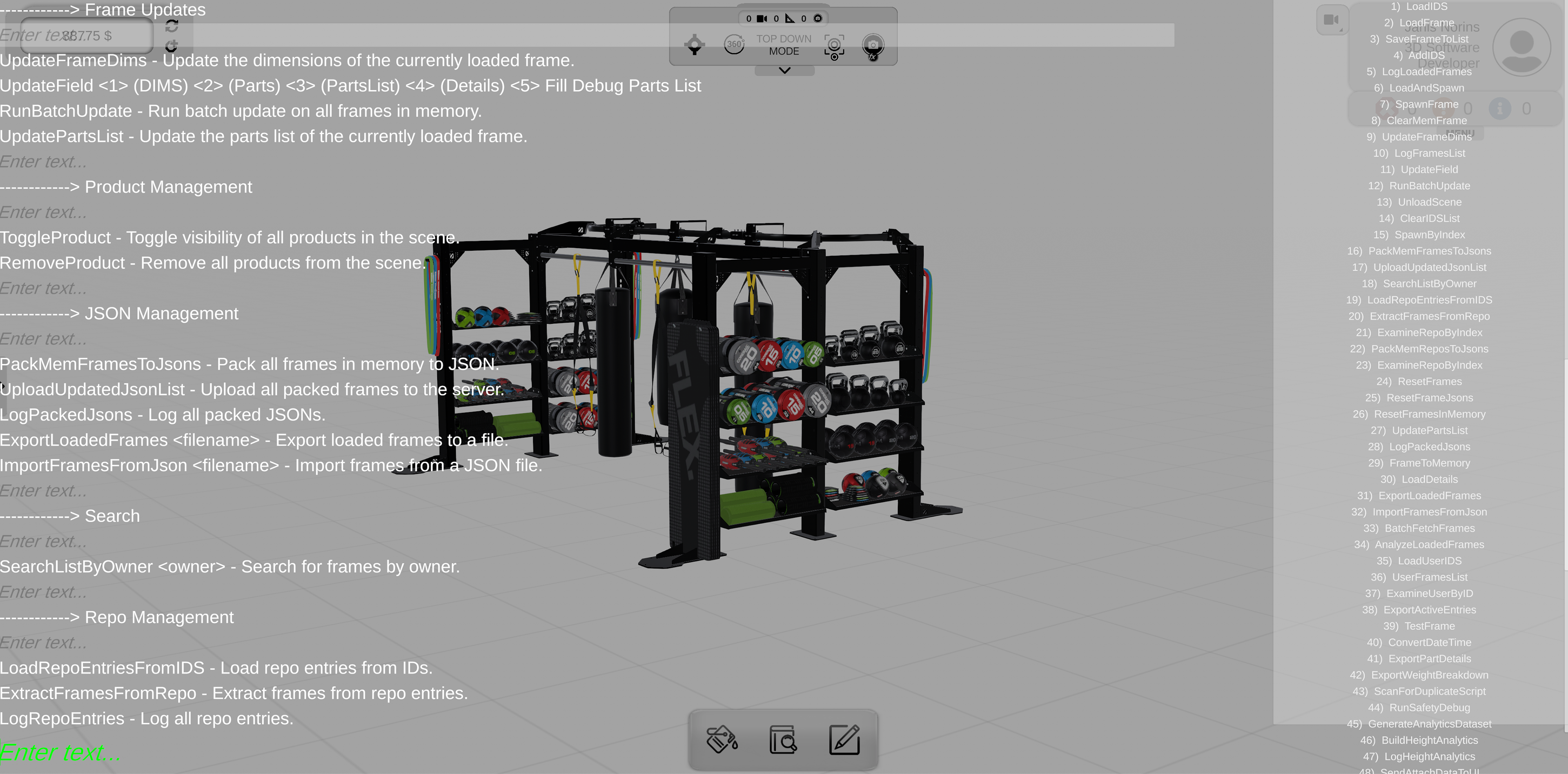
Backend Pipeline & Admin Console: Developed a comprehensive developer console featuring automated database iterators for bulk component updates. Built custom pipeline tools, including automated scene clean-up for streamlined FBX exports, telemetry data gathering for user statistics, and automated QA commands for real-time price validation.
Editor Assets and Tools
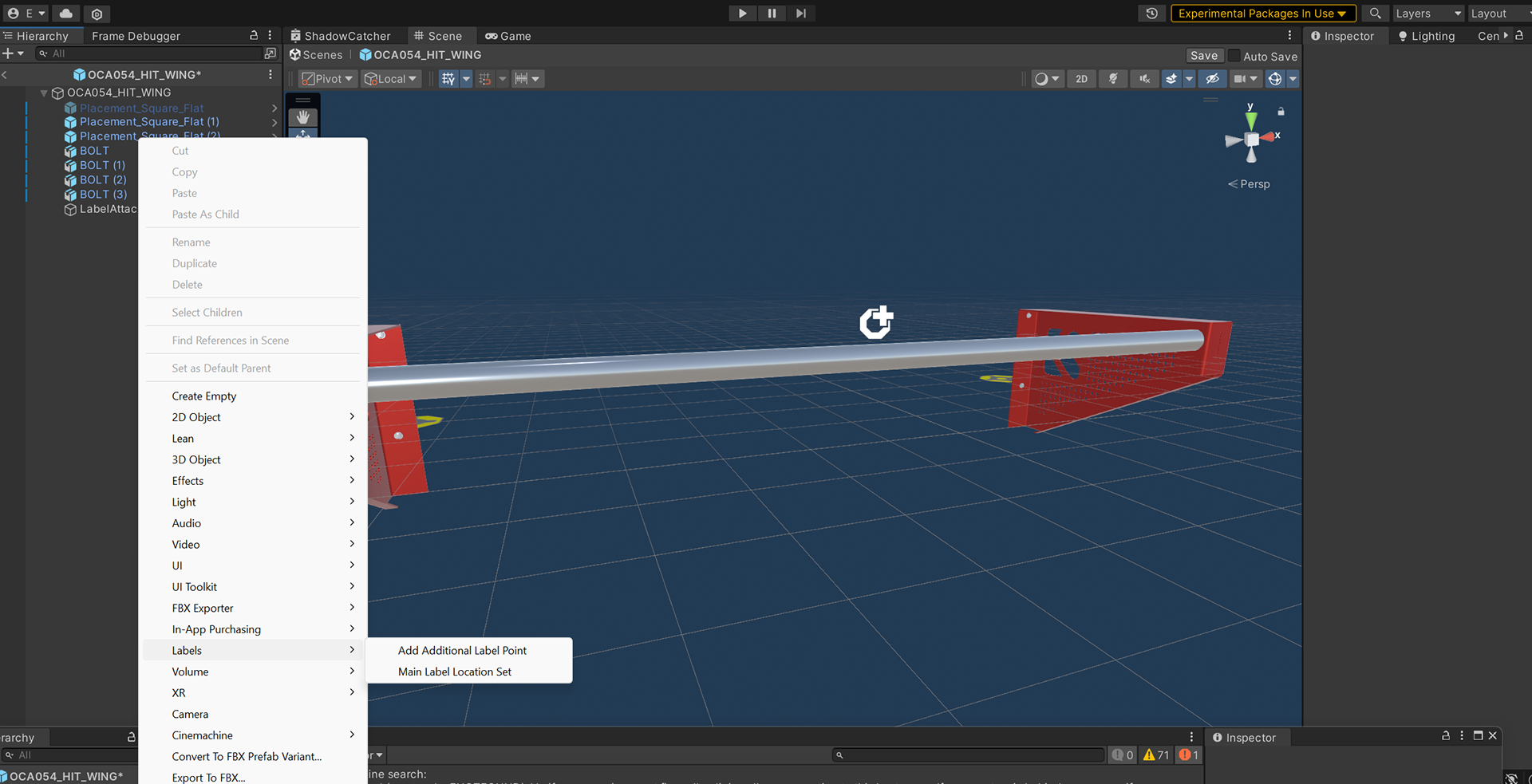
Extended the Unity editor with custom tools and context menu scripts to streamline development workflows. Tools include bulk asset management, test data generation, scene organization, and editor-side helpers for faster asset setup and configuration. These utilities helped simplify repetitive tasks, reduce manual errors, and speed up iteration during development.
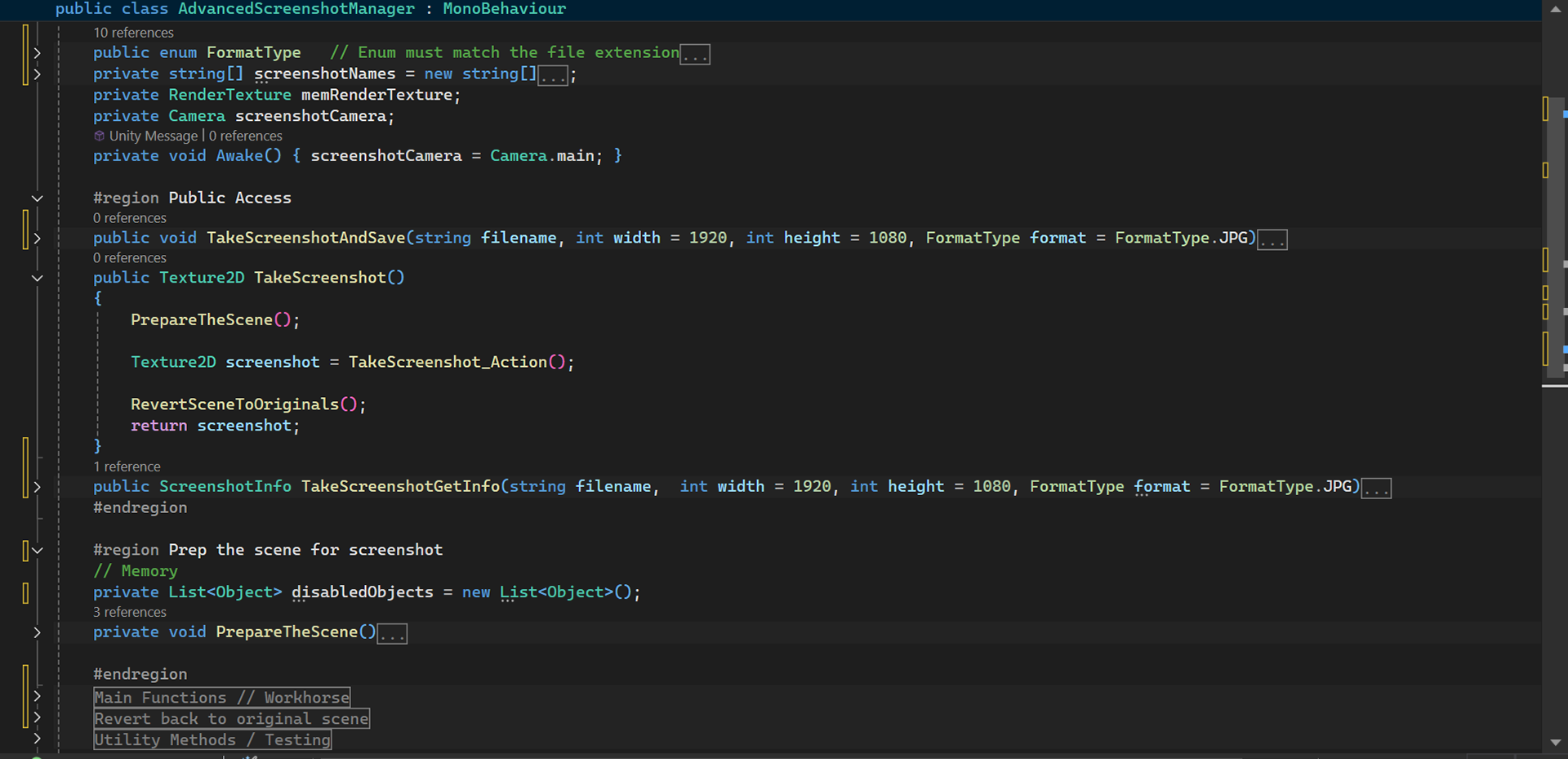
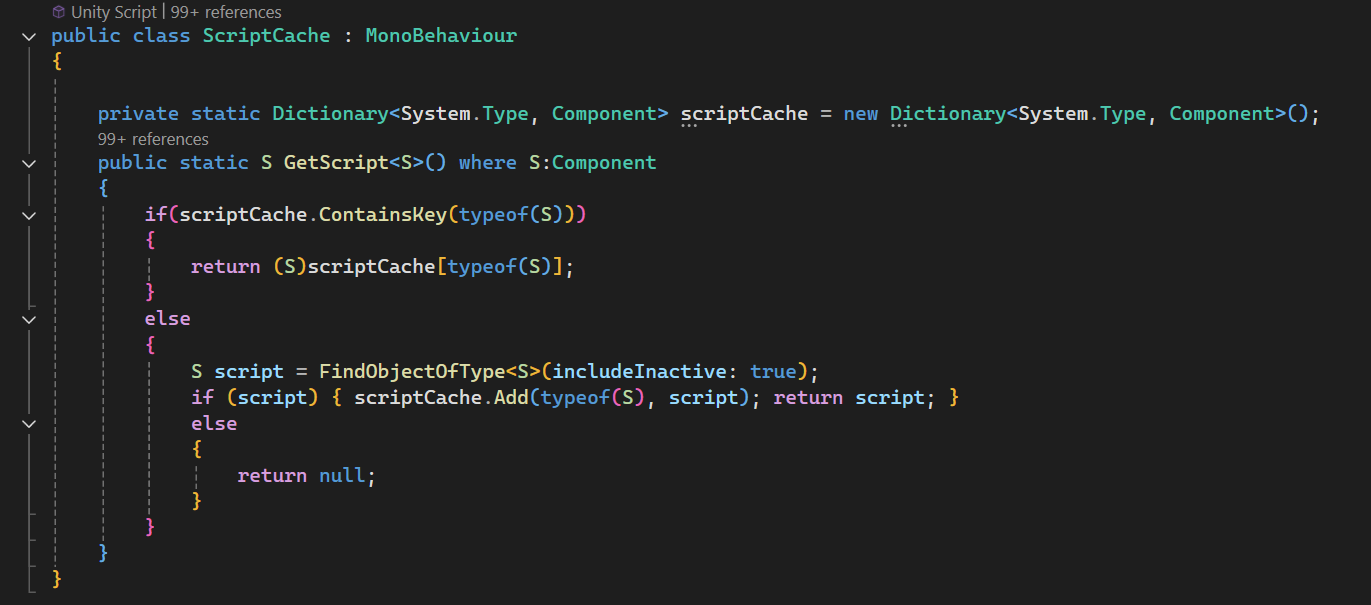
Organized and Scalable Code
Focused on writing clean, maintainable code structures with clear logic flow and minimal repetition. Interfaces, caching systems, reusable utility classes, and tidy data handling help keep the codebase flexible for future scaling and easy debugging. The goal is simple: code that doesn’t need an archaeologist six months later.